Luanda
Another Day of LifeLuanda is both the besieged capital at the center of the book’s wartime narrative and the setting for its decisive political transition: on November 11, 1975, Agostinho Neto proclaimed the People’s Republic of Angola there. The city appears not as a secure seat of power but as a place cut off from escape, where ships offshore can seem like a last hope, independence is proclaimed amid darkness and gunfire, and ordinary residents remain vulnerable to loss and disappearance.
Arrival and the Besieged City
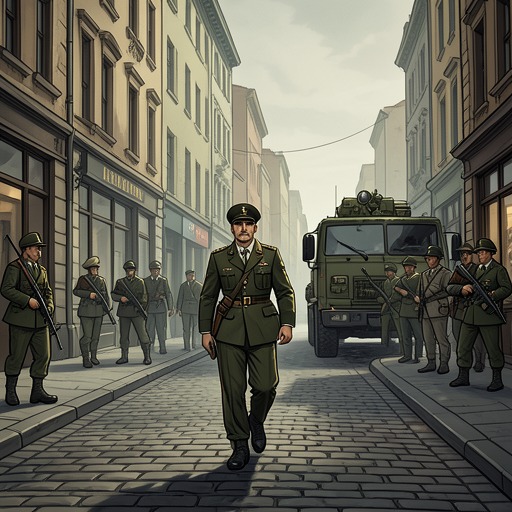
The narrator reaches Luanda after persuading the crew of one of the last Portuguese military aircraft flying from Lisbon to take him. Seen from the descending plane, the city is a motionless white patch surrounded by sun. The view from the Tivoli Hotel, where he lives for three months, is more specific: the bay and port lie below, with freighters flying European flags offshore. Their captains keep radio contact with Europe and know more about events in Angola than the people trapped in the capital.
As the battle for Luanda approaches, the ships leave the bay and stop at the horizon. With escape by land impossible and rumors that the airport may soon be bombarded and disabled, their departure makes the city’s isolation tangible. The narrator watches their movements as a source of information; when the bay empties, he listens for artillery and wonders whether reports are true that two thousand of Holden Roberto’s soldiers are hidden in the city, awaiting orders to begin a massacre. When the ships return, the immediate threat seems to recede. Their captains expect, as before, to load cotton and coffee, while the narrator privately welcomes their return as a brief reprieve.
The hotel also holds the private costs of the city’s siege. In the next room are Don Silva, a diamond merchant, and his wife Dona Esmeralda, who is dying of cancer. Hospitals are closed and doctors have left; she spends her final days without medical help or comfort, her body twisted in pain among pillows. The narrator is afraid to enter, but once asks whether his nighttime typing disturbs her. Her reply turns the interruption into a measure of how little time remains to her. The scene makes the collapse of care inside Luanda as immediate as the military danger beyond the hotel.
A Capital of Liberation and Political Struggle
Luanda is also where the MPLA takes organizational form. On December 10, 1956, it arises from the union of PLUA with other small liberation groups, under the leadership of the thirty-four-year-old doctor and poet Agostinho Neto. The city becomes the setting for an armed beginning on February 4, 1961, when MPLA fighters attack the Casa de Reclusão Militar prison, where Angolan patriots are incarcerated. The chronology identifies the assault as the commencement of the armed struggle for Angola’s liberation.
The postcolonial transition in the city is neither smooth nor uncontested. The provisional government created by the Alvor Agreement goes into effect in Luanda on January 30, 1975; five months later the FNLA and UNITA resign from it. In March, FNLA troops attack civilians in the capital who have declared for the MPLA, in bloody riots. By July the MPLA liberates Luanda from FNLA divisions, and the majority of Angola’s territory comes under MPLA control. These changes make the capital a prize and a political base, while showing that the transfer of power is accompanied by violence among Angolan forces, not simply by the end of Portuguese rule.
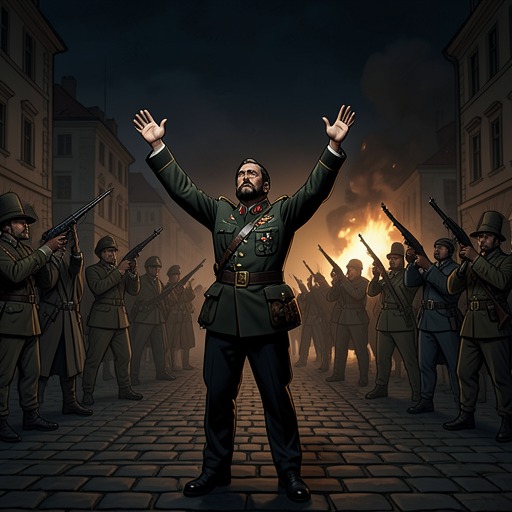
The city remains the seat of a contested new order. On November 11, at midnight, thousands gather in a dark, cloudy square despite requests to avoid crowds in case of an attack. Agostinho Neto reads the proclamation of the People’s Republic of Angola from a platform; his voice breaks, and he pauses several times. Applause and cheers rise from the largely unseen crowd, but there are no further speeches. The lights go out, people hurry away into the darkness, and artillery on the northern front remains silent. Then soldiers in town fire wildly into the air, turning the quiet square into a chaotic uproar. Independence is publicly declared, but the sound of celebration also carries the disorder and danger of a city still at war.
Independence and Its Uneasy Aftermath
The proclamation’s political program gives the new capital a projected future: the principal natural resources and elements of the economy are to belong to the state; citizens are to have rights to employment and education; and Angola is to pursue positive neutrality. Agostinho Neto becomes the republic’s first president. The formal promise of a people’s democracy stands beside the scene at the Tivoli, where the oldest residents celebrate with champagne and whisky saved by Oscar for the occasion. Rather than producing uncomplicated joy, the alcohol intensifies the veterans’ exhaustion. Oscar, at the limit of his strength, blurts out that if this is what independence is like, he will blow his brains out; he then recognizes the incongruity, laughs, falls quiet, and falls asleep at the table among empty glasses. The scene does not negate the proclamation, but places its historical hope beside the fatigue of people who have endured the war in the city.
Luanda remains connected to the shifting front through the movement of aircraft and wounded soldiers. After a night battle sixty miles east of Porto Amboim, where South African forces try to force a river crossing, the narrator returns to the capital in Ruiz’s airplane. Several severely wounded local and Cuban soldiers lie on the floor; two are unconscious, and African women sit motionless in a corner. In the rain, the plane lands at Luanda, where two heavy Antonovs stand on a side apron after bringing mortars. The city is therefore not sealed off from the fighting: casualties and military supplies arrive by air even as land escape is described as impossible.
People, Departure, and the City’s Afterlife
The record of Luanda’s population gives the city’s changing appearance a colonial context. In its streets, the narrator sees white children begging, a sight the text describes as unimaginable in other African states. In 1975, more than 95 percent of Angola’s European inhabitants leave for Portugal and other countries, especially Brazil; some later return. The mass departure is part of the book’s account of a capital emptied and unsettled by the end of colonial rule, though the figures refer to Angola as a whole rather than to Luanda alone.
Before leaving, the narrator visits President Neto at a villa outside town, built on a slope above a small cove lined with palms. They talk about poetry, and the narrator is carrying Neto’s latest volume, Sagrada Esperança, which had appeared in Lisbon that year. Another farewell is less certain: Dona Cartagina breaks down crying, and the narrator tells her he will return without knowing whether this is true. The city’s human meaning gathers around such personal attachments as much as around official ceremonies.
The book’s final image keeps Luanda open beyond the narrator’s departure. He cannot imagine the city, Angola, or the war without Dona Cartagina and hopes that she is still alive. He pictures her walking in the morning toward the Hotel Tivoli, grey-haired and hurrying because much cleaning awaits her. In this imagined return, the capital is not restored by a political declaration or made secure by the end of one battle. It persists through a familiar route, a daily task, and the possibility of recognizing someone who once gave the city its human scale.